What is IELTS?
IELTS (International English Language Testing System) is the most widely
recognised examination system in English language taken by international students
wishing to come and study in UK further or higher education. Students applying for
courses in FE colleges need to show evidence of competence in English language
and as IELTS is the most commonly used system for doing this, although others suchTOEFL or some Cambridge exams may also be accepted.
What is a foundation year programme?
Many FE colleges offer one-year international foundation year or 'access'
programmes. These programmes have different discipline-specific modules and
prepare students to enter an honours degree programme at undergraduate level.
They also include modules that can help international students reach the required
level in English language and develop the study skills needed for degree level study.
What are the benefits of doing a foundation year programme in FE?
If your aim is to study on an undergraduate degree programme at university, a
foundation year programme may help provide you with access to this. Many
universities prefer students who have completed foundation year programmes first,
and may even accredit or have official agreements with colleges offering them. This
means that you may be guaranteed a place on a course at a particular university,
provided that you pass the foundation year.
What is a foundation degree course?
A foundation degree programme is a vocational degree course which combines
academic study and work-based learning. FE colleges offering these universityaccredited
courses collaborate with local employers so that students can develop
their skills in the real workplace as part of their course. They may be full-time or parttime,
and involve modular elements, distance learning or online learning. Two-year
foundation degree programmes can often be topped up with a further year of study if
students wish to receive an honours degree, often at a university with which your FE
college is in partnership.
Will there be an orientation or induction programme to help me settle in when I
arrive?
All FE colleges are likely to provide an induction programme for home and/or
international students at the start of the academic year. This may be a one-day
induction or last for several days. It is likely to include an orientation to the college
and some of the study skills you will need on your course. It will allow you to meet
key people from the college and make friends with other students.
Will someone from college be there to help me when I arrive in the UK?
Many FE colleges operate a 'Meet and Greet' service at major airports in the UK.
This means that they will meet you on arrival and take you to the college by coach or
minibus. You should be able to find information about this service on your college
website or by emailing your college directly.
Where will I live when I arrive at college?
Accommodation options will vary depending on the location of your FE college.
Common options include staying in a college hall of residence, sharing a house or
flat with other students, finding a private bedsit, or living with a homestay family. Not
all of these options are available through every college. You should contact your
college accommodation office to find out what options are available for you in the
location where you will be studying.
How much support can my FE college give me if I want to find a job?
Many colleges put an emphasis on providing courses that increase their students'
opportunities
What about my personal safety while studying at college in the UK?
FE colleges are particularly concerned about the welfare of their international
students and want them to feel safe and secure while studying in the UK.
What is a Sixth Form college and why is it relevant to FE?
Sixth Form relates to the final 2 years of secondary education in the UK. Sixth Form
colleges focus on preparing students for pre-university exams.
What links do FE colleges have with their local community?
What is a college summer school?
Many FE colleges run summer schools between July and September.
What is an English Language Plus programme?
Some FE colleges offer English Language Plus programmes.
What size classes will there be on my course?
FE colleges prefer to teach students in smaller groups where possible. This means
that you are likely to experience an average class size of 15 for teaching.
Will I be able to choose several courses or units rather than just one?
FE colleges offer quite a lot of flexibility in terms of the courses that you can 'mix and
match' in your programme of study. For example it may be possible to follow
vocational and academic courses together. English Language Plus is often available
combined with an International Foundation Year programme.
What is the difference between an FE college and a private college?
There is a difference between FE colleges and private colleges. Only FE colleges
are subject to regular government inspection to ensure that their courses meet
national standards for quality. Private colleges are not subject to such regulation and
may reflect variable quality as a result. In contrast, some universities retain the word
'college' as part of their titles. These HE institutions are not the same as private
colleges but have full university status.
The ECTS grading scale is based on the class percentile (similar, but not identical to the class rank) of a student in a given assessment, that is how he/she performed relative to other students in the same class (or in a significant group of students). The ECTS system classifies students into broad groups and thus makes interpretation of ranking simpler. This grouping is the core of the ECTS grading system.
The ECTS system initially divides students between pass and fail groups, and then assesses the performance of these two groups separately. Those obtaining passing grades are divided into five subgroups: the best 10% are awarded an A-grade, the next 25% a B-grade, the following 30% a C-grade, the following 25% a D-grade and the final 10% an E-grade.
Those who have not achieved a performance sufficient to allow a passing grade are divided into two subgroups: FX (Fail – some more work required before credit can be awarded) and F (Fail – considerable further work is required). This distinction allows differentiation between those students who have been assessed as almost passing and those who have clearly lacked the required knowledge and skills.
This system can be represented in a table, as follows:
Grade
best/next
Definition
A
10 %
B
25 %
C
30 %
D
25 %
E
10 %
FX
Fail - some more work required before the credit can be awarded
F
Fail - considerable further work is required
If you are an EU student who doesn't usually live in the UK, the Channel Islands or the Isle of Man, you should complete one of the forms on this page to apply for student finance in England, Northern Ireland or Wales.
You'll need to:
-fill in the relevant application form for your type of course and year of study (there are guidance notes to help you complete the forms)
-send the completed form to the Student Finance Services European Team
-make sure you apply by the relevant deadline
Do you qualify for extra support on top of help with tuition fees?
You may be able to get additional support if:
-you're an EU national who will have lived in the UK, Channel Islands or Isle of Man for three years or more by the time you start your course
-you're a migrant worker from an EEA country or Switzerland living in the UK
-you're the child of a Turkish worker living in the UK
The standard first degree in England, Northern Ireland and Wales is the bachelors degree conferred with honours. It usually takes three years.
The honours are usually categorised into four classes:
First class honours (1st)
Second class honours, divided into:
Upper division, or upper second (2:1)
Lower division, or lower second (2:2)
Third class honours (3rd)
Graduands who have not achieved the standard for the award of honours may be admitted without honours to the degree of bachelor; this is popularly referred to as an 'ordinary degree' or 'pass degree'.
The Graduateship (post-nominal GCGI) of the City & Guilds of London Institute is mapped to the standard required to be admitted to a British honours degree.
The 'Level 6 Graduate Diploma in Engineering' awarded by the Engineering Council via the City & Guilds of London Institute is mapped at the same level as that required to become a Bachelor of Engineering at a British university.
Some universities admit graduands to Master's degrees as a first degree following an integrated programme of study. These degrees are usually designated by the subject, such as Master o Engineering for engineering, Master of Physics for physics, Master of Mathematics for mathematics, and so on; it usually takes four years to read for them. Graduation to these degrees is always with honours, see above for the classes of honours. Master of Engineering in particular has now become the standard first degree in engineering at the top UK universities, replacing the older Bachelor of Engineering.
The 'Level 7 Postgraduate Diploma in Engineering' awarded by the Engineering Council via the City & Guilds of London Institute, is mapped at the same level as that required to become a Bachelor of Engineering at a British university.
Unlike the case in the United States, due to earlier specialisation, to read for a master's degrees may take only one year of full-time study, and the usual amount of time spent working towards a Ph.D. is three years full-time.
A foundation degree can be awarded for having completed two years of study in what is usually a vocational discipline. The foundation degree is comparable to an associate's degree in the United States, and can be awarded by a university, or college of higher education.
This stage lasts for three or four years and leads to the award of a Bachelor's Degree in Arts, Science or other fields (Technology, Law, Engineering, etc.). In some Scottish universities the first degree is a Master's Degree. The Bachelor's Degree is conferred as a Pass Degree or an Honours Degree where studies are more specialized. The Bachelor's Honours Degree is classified as a First Class Honours, a Second Class Honours or a Third Class Honours. In some universities, a two-year course leads to a Diploma in Higher Education (DipHE). Some universities have adopted the credit-unit or modular system of assessment. In some universities students must follow a foundation course before embarking on the course leading to the Bachelor's Degree. Students of foreign languages are sometimes required to study or work for an additional year in the country of the target language. Some institutions have introduced accelerated two-year degrees which require students to study during the normal vacation period.
University level second stage: Master's Degree, Master of Philosophy:
Study at master's level is at the forefront of an academic or professional discipline. Students must show originality in their application of knowledge and advancement of knowledge. The normal entry requirement for a Master's degree is a good Bachelor's degree. A Master's degree is normally studied over one year. Some Master's programmes, including the M.Eng, are integrated in undergraduate programmes and result in a postgraduate qualification, not an undergraduate one, after four years of study.At a university, after two years of additional study and the successful presentation of a thesis, students obtain the Master of Philosophy (M.Phil) degree.
University level third stage: Doctor of Philosophy, Higher Doctorate:
After usually three years' further study beyond the Master's Degree, the candidate may present a thesis for the Doctorate of Philosophy (D.Phil. or Ph.D.).A further stage leads to Higher Doctorates which may be awarded by a university in Law, Humanities, Science, Medical Sciences, Music and Theology after a candidate, usually a senior university teacher, has submitted a number of learned, usually published, works.
Basic information:
- Director: Peter Weir
- Movie Sharing: Robin Williams, Ethan Hawke, Robert Sean Leonard, Josh Charles, Gale Hansen, Dylan Kussman, Lara Flynn Boyle, James Waterson, Allelon Ruggiero, Kurtwood Smith
- Year: 1989
- Productions: Steven Haft, Duncan Henderson, Paul Junger Witt, Tony Thomas.
- Guion: Tom Schulman
- Country: United States
- Duration: 124 minutes
Summery:
The students of a boarding school form a poet group in the wake of the new teacher, Mr Keating, who is a very original teacher, so the students will learn a lot in his classes.
In the poet group they debate on the theme of carpe diem, and they see it like a method to pursue their dreams. One of the boy ended up committing suicide by or achieve their dream. Finally the other teachers were against Mr Keating by his way of explaining and the slogan Carpe Diem, but the students fought for his permanence in the school.
Hey! I am now in class, but I have finished our homework so I am going to write my little opinion. This week we have had to vote one Nobel Prize that we did the last week. I have to go we are a the endo of the class. Bye!!
Hi bloggers!
Bye!

The Nobel Peace Prize is one of five Nobel Prizes were instituted by the Swedish industrialist and inventor Alfred Nobel in 1901.
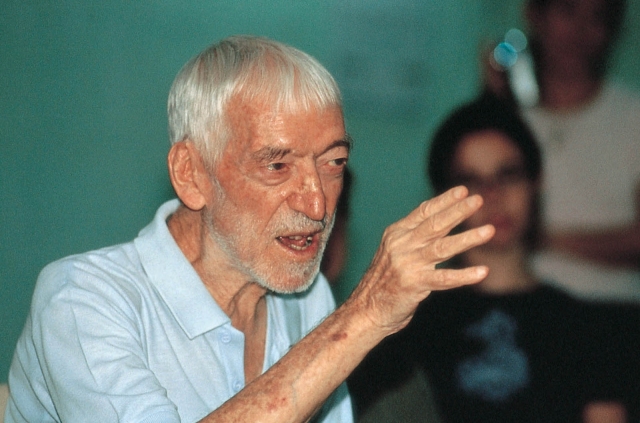
The winner of the prize in 2010 was Liu Xiaobo. Vicente Ferrer Foundation was a candidate for the Nobel Peace Prize 2010. Since 3 February 2009, 53.100 social support worldwide are preparing the application for the Vicente Ferrer Foundation
The Vicente Ferrer Foundation is an NGDO committed to the process of transforming the poorest and most needy areas of Andhra Pradesh in southeast India.We think he deserves it because it promote an overall system of development for the most disadvantaged people, respecting their own culture and not thinking about race, or religion. It has received the support of all faiths, countries, races, conditions, and is also being supported by certain media.
I´ts founder died last June 19 and is seeks to recognize the work of development of the lower classes (the outcasts) implemented by Vicente Ferrer in the State of Anantapur (India), who in 40 years of cooperative has become a desert location in space to further development of its surroundings and contribute to other areas of its system of development aid. Vicente Ferrer helped people, and now the people want to protect the foundation he created giving the Nobel Prize.
More information in:
http://www.fundacionvicenteferrer.org/en/about-us/NGDO
Hello girls!! How are you? I am very happy because today is my birthday, I am the first in my class with 16 years!!. The last Project class we had to look for information about Russia, I chose the third clue for do at home and now I have finished my homework so I am very calme.
Bye!
Second Test:
What happened in 1917?
B. The Russian revolution
Who founded the Bolsheviks?
B. Vladimir Lenin
What was the capital city until 1918?
C. St Peterburg
Who was the last Tsar?
B. Nicholas II
What’s the name that this country received between 1922 and 1991?
C. USSR
Who was the last President of the USSR?
C. Mikhail Gorbachev
What creation made St Peterburg jeweler and designer Carl Faberge famous?:
C. Eggs with precious stones
CLUE NUMBER 2 INFORMATION
CARD:
WHEN AND WHERE WAS HE
BORN? He was born the 9th of September in Russia.
NAME AT LEAST 7 WORKS: Childhood, Boyhood, Youth, Family Happiness, The Cossacks, War and Peace and Anna Karenina
WHAT’S HIS WHOLE NAME? Count Lyev Nikolayevich Tolstoy
WHAT ARE HIS 2 MOST FAMOUS
NOVELS ABOUT? War and Peace and Anna Karenina
CLUE NUMBER 1 INFORMATION
CARD:
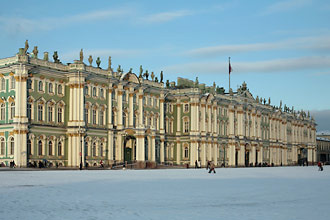
WHERE IS IT? It is in Rusie
HOW MANY BUILDINGS DOES
IT CONSIST OF? It consist of four buildings
WHICH ARE THE OPENING
HOURS? Tuesday to Saturday 10:30am to 6pm
Sundays and national holidays 10:30am to 5pm
NAME AT LEAST 3 CURRENT
EXHIBITONS: Porcelain and Rose, glass Fairy Show and the Fate of One Collection.